When I was very young I, like many kids, thought subjects like history were dull and impenetrable. A series of meaningless dates and events to memorise for the sake of writing history reports. But by the time I was a young adult my attitude had done a 180 - I was a full blown history nerd, thinking about empires, battles, revolutions and more. I was hooked.
At the start of every obsession there was a gateway drug, and mine was video games. Specifically, games like Age of Empires, Civilization and Total War not only had heavy historical inspiration to draw you into the source material, the voluminous flavour text means you’re constantly teased into sinking further into the rabbit hole of learning more. The Civilopedia and Age of Empires’ History section contain books’ worth of information. I remember the exact moment I crossed the point of no return, when one evening, instead of playing the game, I spent hours reading about the Britons and their longbowmen in the Hundred Years War.
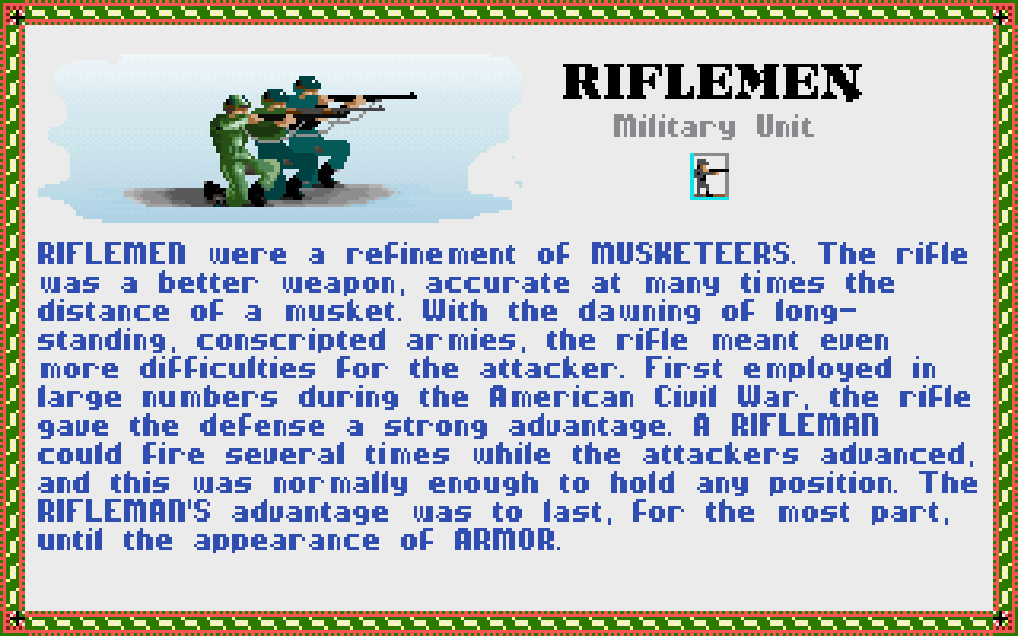
Some games are more than mere entertainment, they leave you with lasting knowledge and inspiration that compounds over time, helping you grow as a person. So not just empty calories, they are nutritious games.
On the other hand, there’s a strain of thought on games that goes like this:
Games should be gameplay first, not spectacle. Games should be fun above all.
This is a sentiment - reaction, or correction - that comes and goes in waves, in response to technological trends, and goes something like this:
- A new technology X comes out
- People get excited, everyone wants to make games with X
- Competition intensifies, people go harder on X, to the detriment of gameplay
- Player backlash, nimbler studios go back to basics and/or innovate
- X becomes normalised; meanwhile a new technology Y comes out
We’ve seen it again and again, from CDs triggering an FMV craze, 5th and 6th generation consoles making 3D graphics dominant, the “HD era” ballooning production costs inspiring the indie games boom. Of course chasing these trends can be an effective short term strategy, there are heavy caveats and such games don’t tend to age well.
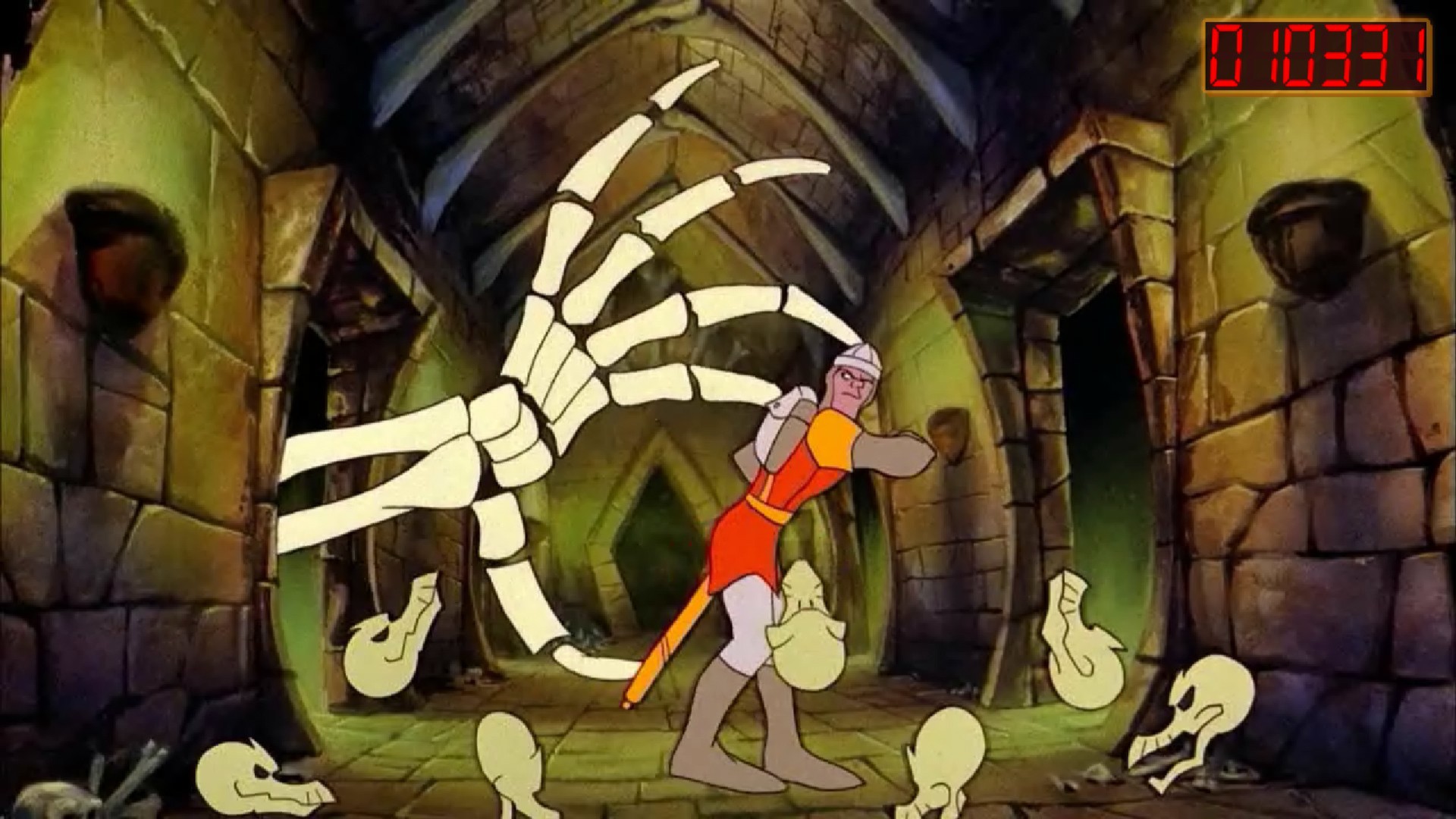


While gameplay and “fun” are important, prioritising it above all is overly reductive, because games are so much more than just that. Just as other media and art forms can be so much more than just entertainment, so can games, and arguably more so, since games are interactive and dynamic. Games can teach, by setting up an escalating series of challenges. Games create empathy, by giving you agency and placing you directly in the shoes of a protagonist. Games produce understanding, by letting players experiment with complex systems, test hypotheses, and learn by doing. No other medium is quite like it.
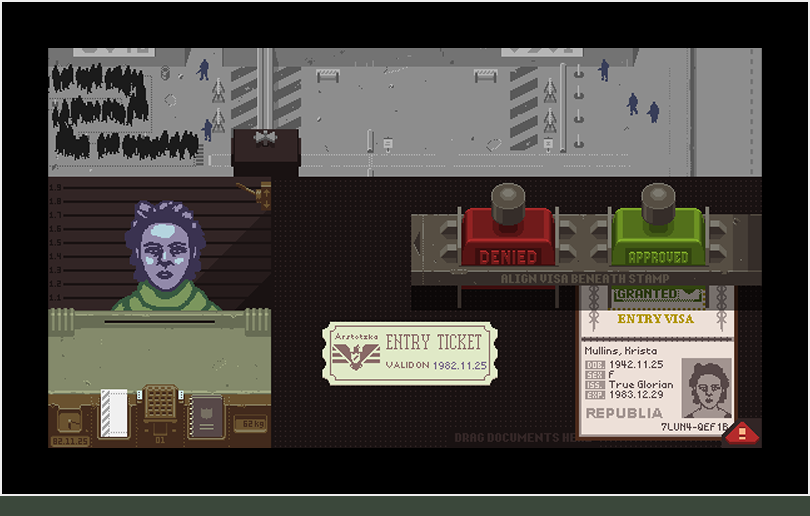
Many works have explored the banality of evil but Papers Please puts you in the shoes of an agent of an inhuman system, forcing you to make tough decisions. It’s a unique power of games, delivering empathy and nuance in a covert package.
So let’s use this power for something cool, something good.
Going back to historical games like Civilization and Age of Empires and their stupendous amounts of historical text - this is not something you put together lightly; it requires care, craft and passion. The people involved were enthusiasts, making stuff for future enthusiasts. Nor were they educators; the creators of Age of Empires specifically landed on the historical RTS concept because they sensed a gap in the market - they wanted to make a good game first. Which I guess is the real reason why game makers should care:
Age of Empires 2 has had incredible legs, receiving expansions decades after its release. The game now has a dizzying array of civilisations and content, being eagerly received (and sometimes passionately critiqued) by dedicated fans. These gamers don’t just care about the game, but the real cultures and history behind them.

Because the players care.
Players care about what’s behind the curtain - its story, setting, characters, themes. Not all players of course, but enough do, and even the ones who don’t can be inspired. Players care more than you might think. It is an outdated view that most gamers are adolescents or casual players who only care about cheap thrills. The games industry is quite mature by this stage, and its players have matured along with it, which means there are plenty of seasoned enthusiasts who have high standards beyond pure gameplay - they care about historical accuracy, consistent worldbuilding, and compelling stories.
Here’s the rub though: players respond to authenticity, so to really make such games, you can’t just cynically respond to player demand, you need to care deeply about it.
But you already do.
You, the game maker, care about making more than just a good game. You have stories to tell, lessons to teach, and experiences to share. In order to find long term success, you need to have that spark that compels you to push further, to keep going during the long slog of making a game, to see things to the end, and do it all again. So let this be your moat: make nutritious games, and leave your players - and yourself - a lasting gift.