The games industry is famously tough and insecure to be in, as it is hit-driven: rush the right game to market at the right moment and you can rake in the big bucks as your game becomes the current cultural phenomenon, or miss it and die in ignominy. This leads to a bunch of pathologies: the persistence of crunch, rushing to hit key sales dates, or to beat a competitor (or avoid being beaten), constantly chasing trends in tech or fickle tastes in the latest hot game genre. No wonder so many people keep burning out.
As a hobbyist, the odds are even more stacked, as you have limited time and energy to chase trends, so making a hit is literally winning the lottery. There’s got to be a better way: don’t make games that quickly go out of date, make games that will be fun even if they are late, that stand the test of time. Make timeless games.
Which Games Become Outdated Easily
Before answering what games are “timeless”, let’s rule out what kind of games we definitely don’t want to make:
- Flashy tech
- What’s trendy right now
- Games that big studios are making
- Games that a lot of people want to make
That is, avoid relying on novelty and in crowded competitive spaces.
Whenever a new piece of technology comes out, there’s great buzz and excitement as people try to make games using it. If you are fast enough to beat others to market with a good game, then this is a smart strategy. Otherwise, you will not only be overshadowed by the initial wave of contenders; because the tech is so new, most people won’t know what they’re doing and make many first-mover mistakes. The penalty for being late to market is thus doubly brutal: you’ll also be competing with those who have learned from those mistakes with a superior product.

Think of new tech like a new console, rendering techniques, VR, 3D… all these things, when they first came out, produced a gold rush, with a few big winners and countless losers. When the iPhone was new it was a massive deal, and it spawned an entire new platform, something that doesn’t happen for decades. But for every Angry Birds or Candy Crush, there were countless losers who languished in obscurity (see also: survivorship bias). The market moved too fast, the wave of aspiring game creators was too overwhelming, quickly saturating the market.
Likewise, there are moments where certain genres or types of games become “in”, and everyone wants to play them, which creates an opportunity for copycats to cash in on the action. Hero shooters, battle royale, Minecraft clones, MOBAs, MMORPGs, “Doom clones”, mascot platformers - all of these trends came and went, spawning a bunch of winners and many more losers. When you win you can truly win big - Fortnite being perhaps the winningest bandwagon-jumper of them all - but it’s also so easy to miss the boat and lose. Imagine your chances of making a successful battle royale game after Fortnite, and without the resources of a large studio behind you!
So now we know what not to make, ideas about what to make should be crystallising:
- Based on mature, proven tech
- Avoids trends, focuses on styles that are older or niche
- Games that aren’t popular with bandwagoners
But before we look into each in detail, let’s examine what exactly makes a game “timeless”.
What are Timeless Games?
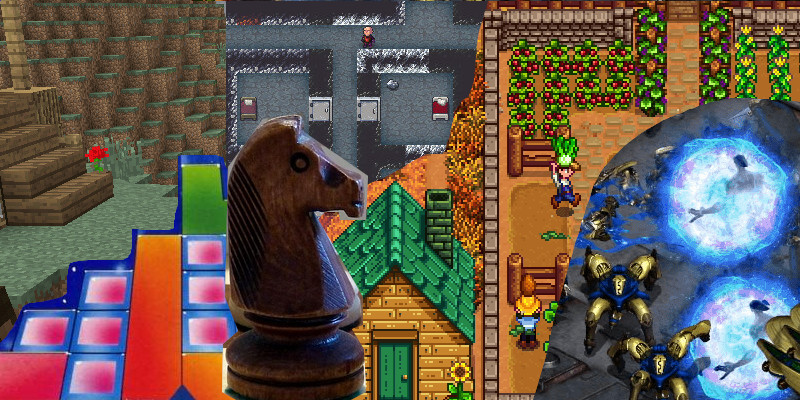
Within any art form, there exist entries that stand the test of time, and are enjoyed by people many years after their first appearances, and bring the same joy and sublime feelings in those who discover it for the first time. In analogue games there are examples such as Chess and Go that are actively enjoyed, hundreds and thousands of years later, even as newer board games are released all the time. There are also examples like Sudoku which, while being relatively recent, still enjoy wide popularity to this day, decades after. Likewise in film, there are many classic movies that are still enjoyed decades later, even as the artform continues to evolve.

What makes some of these examples timeless, even in the face of shifting tastes and trends, while others age like milk, being heavily tied to a certain place in time, and make them hard for modern audiences to enjoy? Before answering this, consider that there are likewise timeless video games, but it seems in this medium, there are way fewer examples. Tetris, 2D Mario, sports games, and perhaps a handful of other notable examples notwithstanding, plus some classic hits that enjoy re-releases and remakes supported by nostalgia. Games just seem to age poorly as a medium, and sometimes entire genres come and go. Time is unkind to games.
Why is this so? One reason is that games are a relatively young artform, and is still evolving rapidly. For most of its lifetime, games were constrained by technical limitations, which meant that new tech was constantly unlocking new possibilities and greatly impacting the whole industry. I argue that it wasn’t until the indie boom of the late 00’s that games could achieve mainstream success without using current gen technology, and today we have a healthy mix of games pushing the latest tech vs those that don’t. Compare this to film, where although technology and techniques are constantly evolving, you don’t need the latest and greatest in order to make a successful film at all. But like games, in the early decades of film, people were still figuring out the artform, and it wasn’t until the 30’s and 40’s when the artform came of age. The best films prior to this are very hard for modern audiences to enjoy, but by the 30’s and 40’s you had classics like Citizen Kane, Casablanca, Gone with the Wind and more. As long as you can get used to black and white and other dated aesthetics, the movies are still eminently enjoyable.
1939 is considered by many to be the greatest year in film, due to classic releases including Gone With the Wind, Mr. Smith Goes to Washington, and The Wizard of Oz.

The good news is that the games industry is now older than the movie industry at the time of those classics, so the “Citizen Kane of games” might be made right about now - the industry has grown up, so to speak. Apart from avoiding fleeting trends or overly tying your game to a specific point in time, making timeless games is about focusing on timeless, universal appeal. Just as classic examples of art depict universal human values, timeless games focus on themes and gameplay mechanics that have raw, timeless appeal. Tetris has the intellectual challenge of rotating shapes in your head and the satisfaction of completing and wiping out rows of blocks. 2D platformers like Mario have the compelling mechanic of predicting parabolic jumping arcs. Behind every good game is a hook that taps into something universally appealing, and games that focus on this have a good chance of staying relevant for years.
On that note, there are plenty of games that haven’t aged perfectly, but whose legacy lives on in other forms. Games that get re-released and remade. Games that inspire other games. Games that birth new genres. Study these games, which parts live on in the remakes, which parts get ditched and improved. If you study enough examples like this, you’ll get a good idea of what parts of those games are timeless, and should in turn inspire our games. Let’s look at a few examples now:

Minecraft: what started as a simple experiment in block rendering and procedural generation turned into a billion dollar game franchise that is enjoyed by an entire generation of players. Rather than detract from the game, the simple graphics invites players to engage, and play with the game, so in a way the game is the ultimate sandbox - not only can you do many things in the game (craft, explore, roleplay) but the game affords creativity. By giving players extreme freedom, the game rewards our primal need for creation and expression, and that’s why it’s had such long legs.

Mario Kart: this mashup of racing and vehicular combat is one of the longest running game franchises, and it’s all based on a single principle: bringing and keeping players together in a simple racing competition. Playing and competing with friends is great fun, but many games struggled with keeping things fun when players have very different skill levels. Mario Kart cleverly uses different powerups and mechanics to keep everyone in the game, from powerful items like the dreaded blue shell or controversial techniques like rubberbanding, players can stay in the game and interact with each other even if they fall far behind.

Dwarf Fortress famously spent 20 years in development, and is perhaps the quintessential example of a timeless game. Built by a microscopic team on a shoestring budget over a ludicrous amount of time, the game could not rely on catching any trends or hype cycles, and instead depended on systems that could produce endless gameplay variation - procedural generation and emergent gameplay dialled up to 11. The game is deep and punishing, promising players - at least those that put in the effort - endless satisfaction and surprise. This heavy emphasis on procgen and deep systems is not the only way to economically create lots of content, but it’s certainly hard to beat.

Harvest Moon / Stardew Valley: one game inspired the other decades later, and both are great examples of how a single good idea can have timeless appeal, and that idea now has an entire genre dedicated to it: cozy games. Where some games get our adrenaline pumping and reward achievement and competition, cozy games let us wind down and relax, and there’s always a time and place for that. It also helps that the stereotypical farming life heavily overlaps with that kind of sentiment.
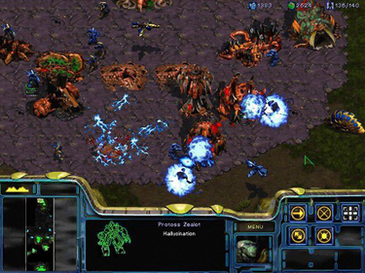
StarCraft: these days RTS games are a solid post-decline niche genre, but somehow StarCraft, released almost 3 decades ago during the RTS golden age, is still going strong and one of the most popular RTS games today, beating even its sequel StarCraft II. The same could be said for Age of Empires II, which was released around the same time, and is more popular than its sequels. How is it that these games have such staying power, even outlasting their sequels? While it is true that these games can be frustrating to play - mechanically cumbersome and full of newbie traps - but it’s those same features that give the games so much character. The bad pathfinding and limited control group sizes make StarCraft both strategically and mechanically challenging, which makes winning fights via good positioning doubly impressive. The slow buildup and large number of civilisations and units in Age of Empires 2 means a lot of players enjoy the game by building nice-looking cities, or just messing around with different armies and unique units. As newer RTS games sanded out the edges, the games lost their character as a result. This shows the folly of pursuing the “perfect” game and optimising the fun away. Sometimes a flawed game is lovely in its own way.
The Takeaway
There’s no formula for making a good game, let alone a timeless one, but by studying what works and what doesn’t, we find some strong patterns that can better our odds:
Don’t
- Chase trends that are based on novelty - time is already working against you
- Competing directly in crowded spaces - the market will move much faster than you can keep up
- Rely on gimmicks or things that aren’t universally appealing - chances are their appeal is based on something fleeting that will not age well
Do
- Focus on universal human motivations. Creativity, mastery, competition, social expression - these will remain fundamental human needs that never go out of style
- Study remakes, what do they keep, what do they improve on. Elements that have already stood the test of time will continue to do so
- Find the core essence of what makes certain games fun, what human needs they appeal to
- Give players a reason to come back to the game again and again, or at least ruthlessly eliminate the reasons that keep players away
Ultimately it’s about decoupling your game from fleeting trends and focusing on universal appeals that stand the test of time. For hobbyists it’s perhaps the best strategy.